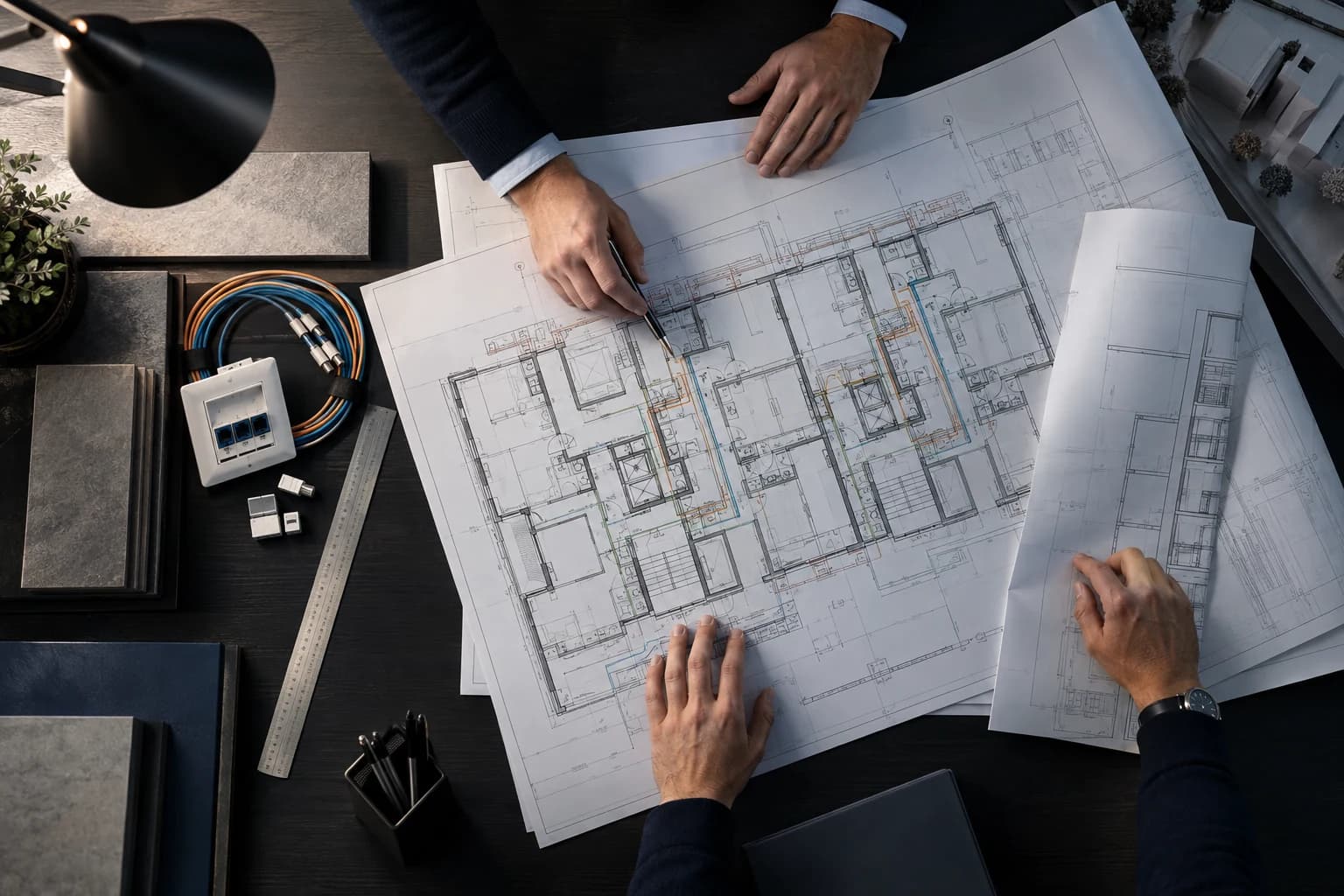
Range of services
In-house cabling & risers
In-house cabling is the part of Network Level 4 that stays inside the building: the cable from the BEP through the riser, the floor distributors and the fibre routing into each unit. It determines whether a building will still be able to connect to every provider in twenty years’ time.
We install four fibres per unit so that several providers can connect. In new builds, we agree the riser design with the electrical design engineers; in existing buildings, we survey the cable routes already in place and run the fibres wherever space and fire protection allow.
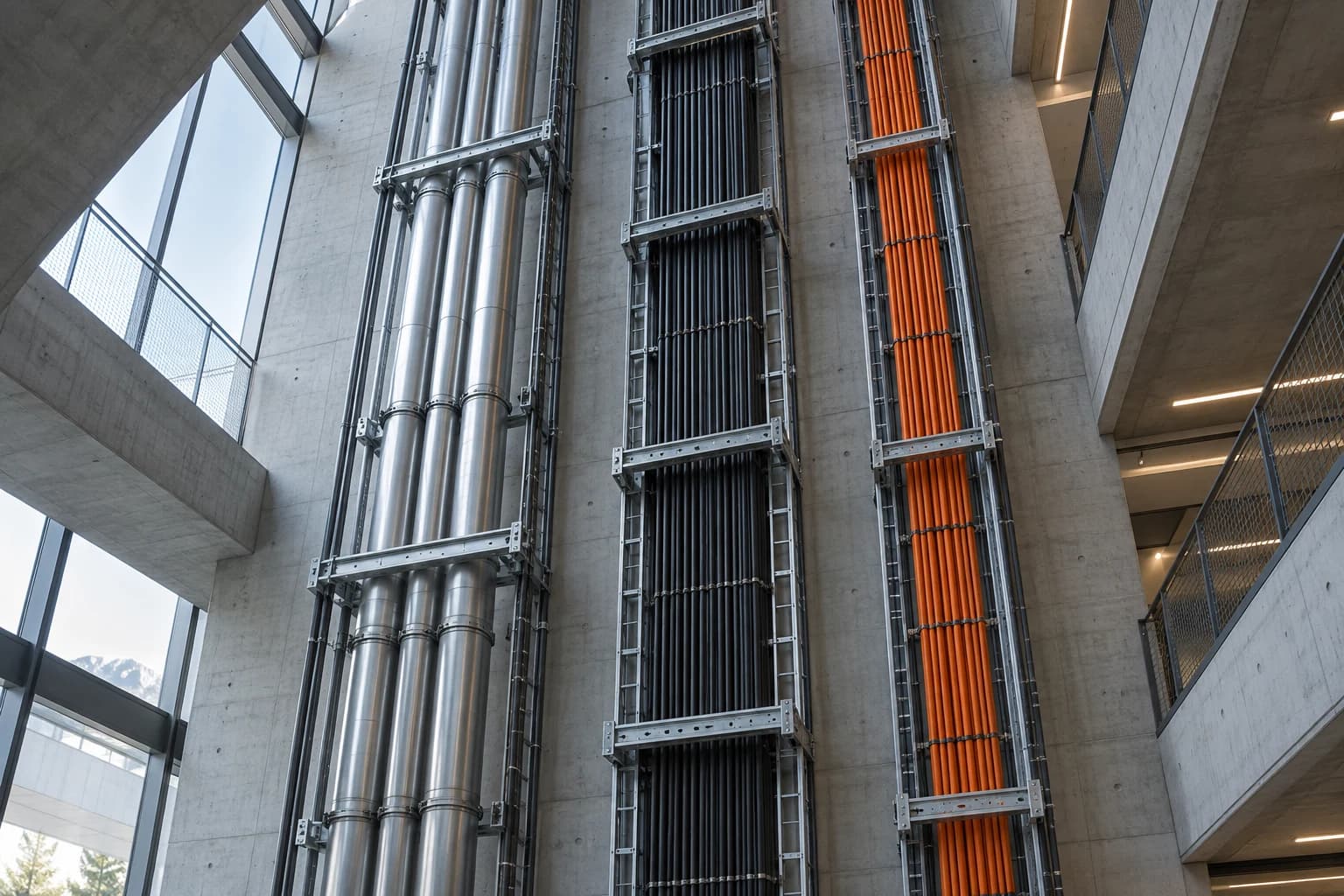
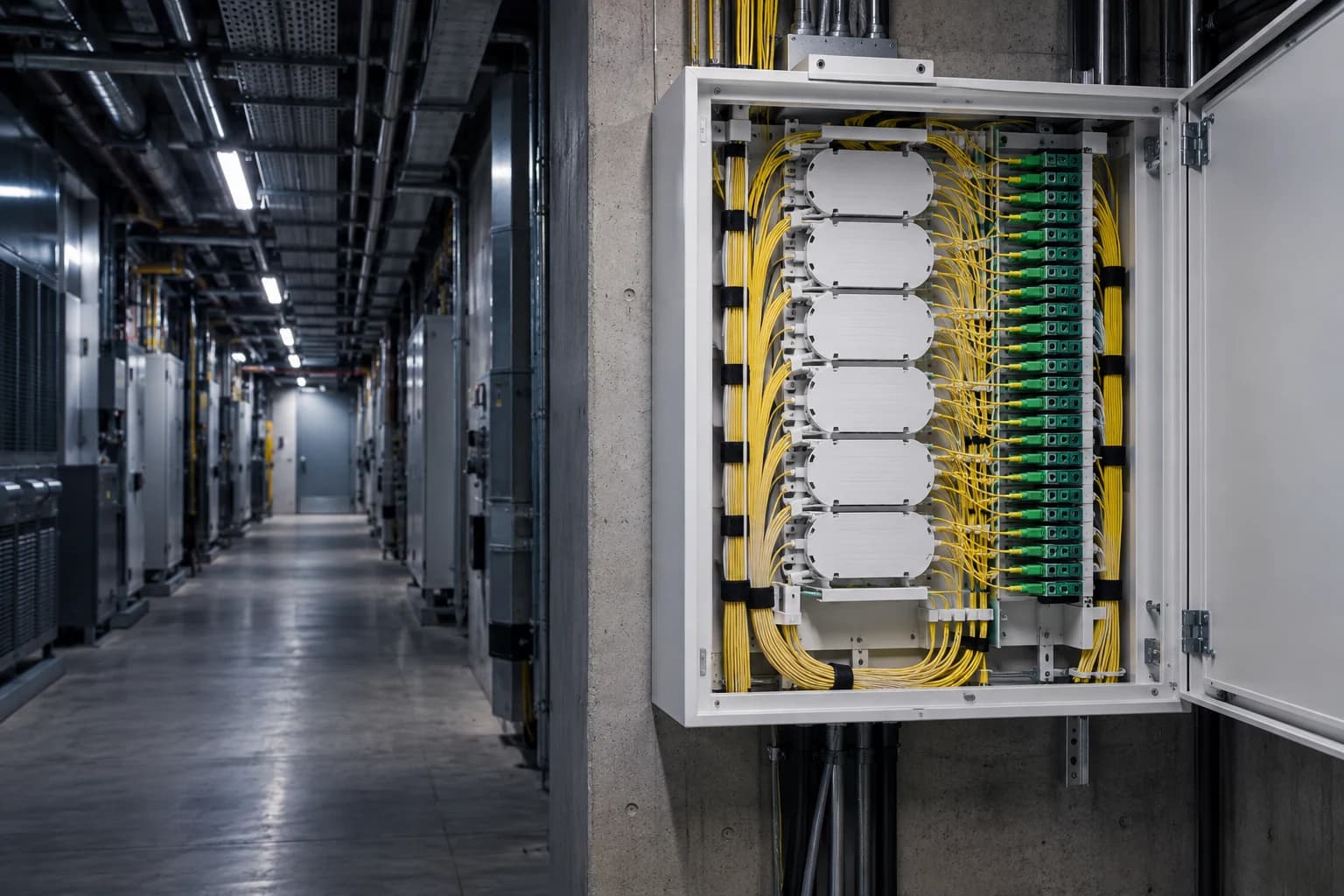
Every penetration between fire compartments is fire-stopped, every floor distributor labelled and every OTO tested. The test report is part of the handover – not an extra.
Labelling is about more than tidiness. Anyone who retrofits a unit, subdivides a flat or traces a fault in the building five years from now will be working from what is written on the floor distributor. That is why distributors, cables and outlets carry the same designations as the test report and the documentation for each unit.
Scope of services
Full scope of services: from the riser design to the test report.
- Services
- Riser design, cable trays, fire stopping, floor distributors, fibre routing to each unit, OTO installation
- Clients
- Property owners, property managers, developers and electrical design engineers on new builds, network operators during their roll-out
- Records
- Test report per fibre, labelled distributors, documentation per unit with OTO-ID
- Standard
- Four fibres per unit (Swiss FTTH standard)
Risers in existing buildings
- Cable routes in use
- On-site survey, routing past existing cables instead of clearing out the riser
- Fire stopping
- Every penetration through a floor slab or fire wall resealed and recorded floor by floor
- Labelling
- Floor distributors, cables and outlets carry the same designations as the test report and documentation
- Spare fibre capacity
- Spare capacity at the floor distributor for flat subdivisions, loft conversions and additional commercial units
- New units
- Additional riser cable from the BEP when the spare capacity on the floor is no longer sufficient
Fibre optics & FTTH: more services

Frequently asked questions
How many fibres are installed per flat?
In Switzerland, the four-fibre model is common practice: four fibres per residential or commercial unit, so that several providers can connect via the same in-house cabling.
What records do I receive?
The final test report for each fibre and the documentation for each unit with its OTO-ID. Both are part of our handover.
What is the OTO outlet and what do I need the OTO-ID for?
The OTO is the fibre outlet in your flat. You use its OTO-ID to order your subscription; your provider uses it to activate the connection.

Talk to the team that builds your network.
Electrical engineering, data centres, fibre, IT and security – across Switzerland, under one roof.
One project manager per contract. A 24/7 service number for installations with a service contract.