Range of services
Who builds what in the fibre network
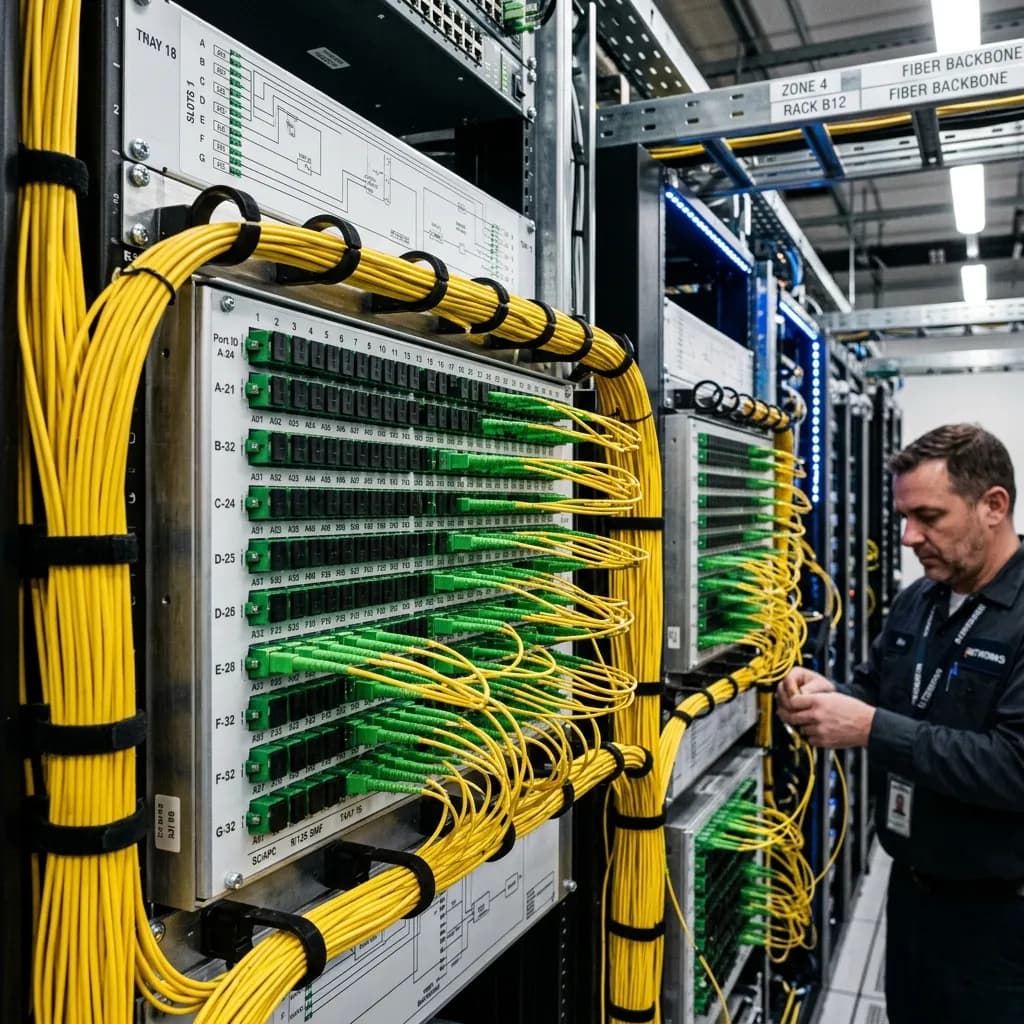
The network operator builds Network Levels 1 to 3, up to the building entry point (BEP) in the basement. From there, Technik Partner builds Network Level 4: fibre splicing, the riser and a four-fibre optical telecommunications outlet (OTO) in every residential and commercial unit. Every fibre is tested and every OTO-ID documented. Technik Partner is the market leader for FTTH in-building installations (Network Level 4) in Switzerland.
- Services
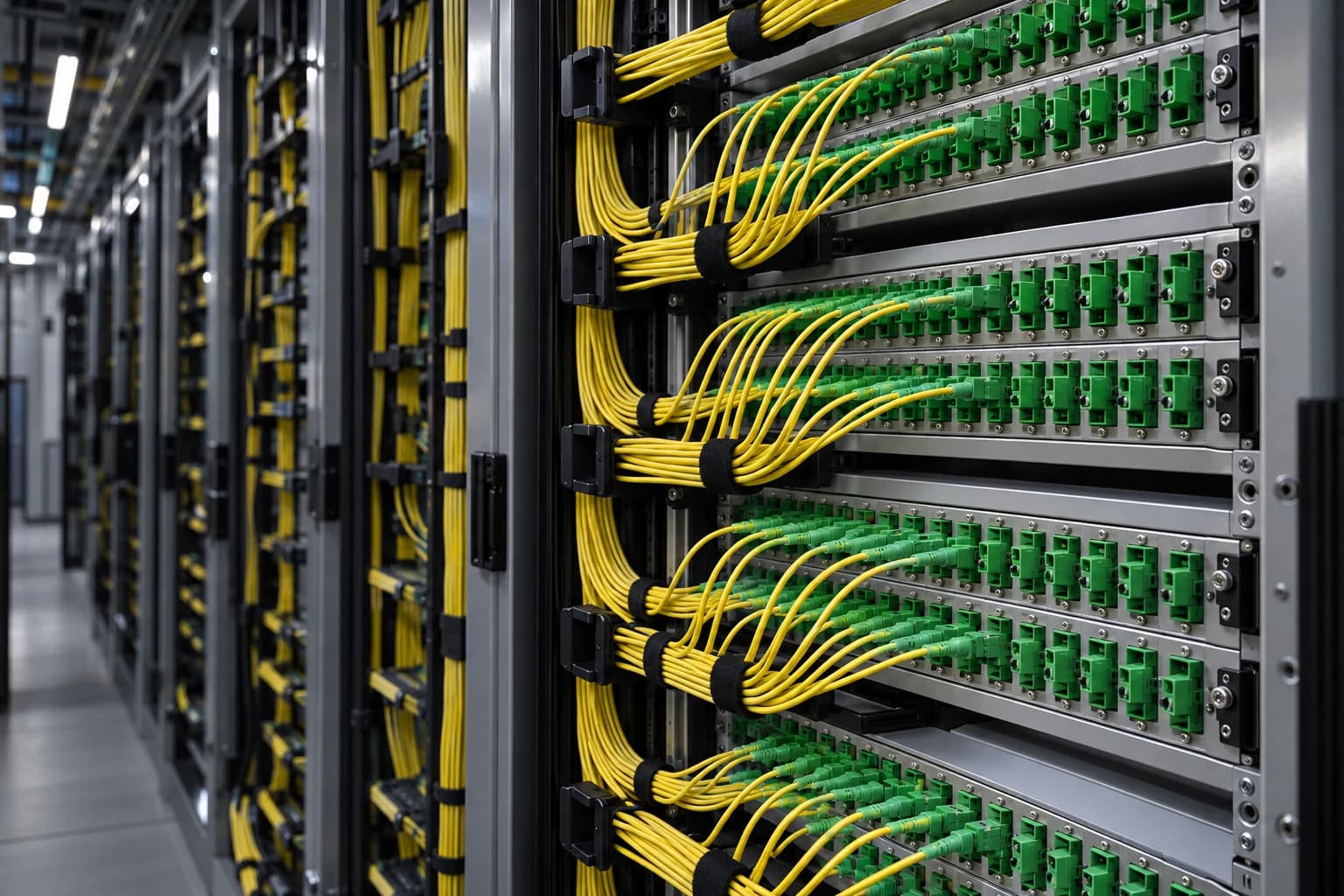
- NE4 in-building connection · In-house cabling & risers · Extension & retrofit · Testing & documentation
- Clients
- Network operators · Property owners · Property managers · Developers and electrical design engineers on new builds
- Records
- Final test per fibre, test report, documentation per unit with OTO-ID
- Typical applications
- Apartment buildings, multi-building developments, commercial buildings, new builds and occupied existing buildings
Fibre optics & FTTH service portfolio

Why Technik Partner
Since 29 July 2026, Technik Partner has been part of the Circet Group, which plans, builds and maintains telecommunications and energy infrastructure across Europe. In its press release of the same day, Circet describes Technik Partner as “Switzerland’s leading specialist in FTTH in-building connectivity (Network Level 4 / NE4) services”, a company that connects more residential units to the fibre network than any other provider in the country. Maintenance, fault service and repairs – around the clock for customers with a service contract.
Occupied properties and new-build projects
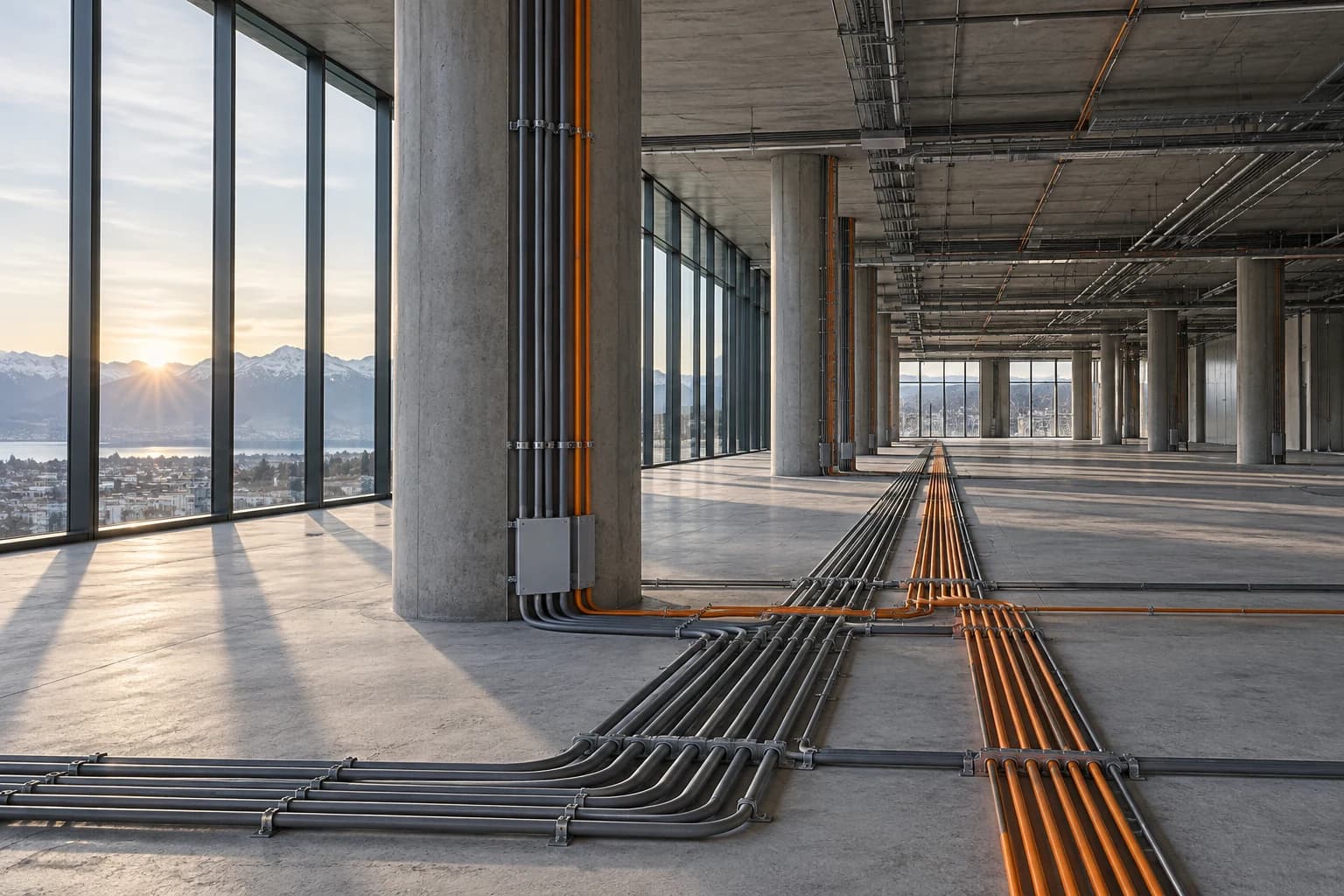
In existing buildings, we survey the riser first and route the fibres past the cables already in place instead of clearing them out. Fire stopping is reinstated at every penetration between fire compartments. Each unit needs just one appointment, announced in writing – even in large, occupied housing developments. In new builds, we agree the riser design with the electrical design engineers before the ceilings are closed up.
Network Levels 1 to 5 – who builds what
The fibre network is divided into five network levels. Technik Partner builds Network Level 4 – the in-building section from the BEP to the OTO – on behalf of network operators or directly for property owners.
The division into network levels is not a theoretical construct but a boundary of responsibility. NE1 to NE3 belong to the network operator: it builds the backbone, the feeder and the drop cable up to the building. From the BEP in the basement onwards, the installation is under the property owner’s control – and that is exactly where our remit begins.
This boundary also explains where our contracts come from. When a network operator rolls out its network in a neighbourhood, it engages us as its in-building partner for Network Level 4. When a property owner retrofits its properties or a developer plans a new build, the contract comes directly from them. The scope of services is the same in both cases.
At the upper end, our responsibility stops at the OTO. Everything beyond it – router, Wi-Fi, office cabling – is Network Level 5 and belongs to the users. For businesses, we build this part too, but as structured building cabling with Cat 6A copper and OM4 or OS2 fibre.
Keeping the levels apart also means reading a fault report correctly. If a connection fails, the provider first checks the active equipment and then the link up to the OTO. If the fault lies inside the building, the test report from the building connection is the quickest place to start: it shows the attenuation and continuity of each fibre at the time of handover.
The OTO-ID is the interface between construction and operation. Residents use it to order their subscription, the provider uses it to activate the connection, and it keeps every connection uniquely assigned, even after a change of tenant. That is why it appears in the documentation for each unit and not just on the OTO’s label.
- NE1 · Backbone
- The long-distance core network between the network operator’s exchanges.
- NE2 · Feeder
- From the exchange into the neighbourhood – the feeder up to the local distribution point.
- NE3 · Drop
- From the local distribution point to the building entry point (BEP) in the basement.
- NE4 · In-building
- From the BEP via the riser and floor distributors to the OTO in every unit – our remit.
- NE5 · Home network
- Inside the unit, from the OTO onwards: router, Wi-Fi, local network – for businesses we build it as structured cabling (IT & communications).
Talk to the team that builds your network.
Electrical engineering, data centres, fibre, IT and security – across Switzerland, under one roof.
Your contact person: Head of Fibre Optics & FTTH